About Snape
The village of Snape in North Yorkshire stands 2 miles to the south of Bedale and 3 miles west of the A1.
With a population of about 350, the village has numerous historical associations including:
- The site of a Roman Villa
- The connection at Snape Castle with Middleham Castle and of the mother and the wife of Richard III.
- The Nevilles of Raby Castle and the Cecils of Burghley House were the aristocratic owners through ascendancy and marriage of the estates of Snape for over 500 years from the 1300s to the 1800s.
- The residency of Catherine Parr before her marriage to Henry VIII.
- Involvement in the Pilgrimage of Grace in 1536.
- Prior to the mid 19th century Snape was a centre for the woolcombing trade.
- Most of Snape (along with much of Well and part of Thornton Watlass) was once part of the Thorp Perrow Estate.
- St. Mary’s Chapel in Snape Castle formally became a place of Anglican Worship following the 1926 Sale of the Thorp Perrow estate.
- The Thorp Perrow estate lies just to the north of the village and boasts a fine arboretum.
Our Aim
Snape Local History Group was formed in January 1985 by members of the community to research the history of the village and Parish (including the village of WELL), both past and present. The Group is keen to invite the help of people who have information about the villages and/or the inhabitants and to share with others the historical information we have gathered over the years.
Meetings
The Group meets on a Friday evening at 7.30 pm. Meetings are held once a fortnight (normally the 2nd and 4th Fridays) in the period from September to April; the last meeting of the programme being the AGM which is held at the end of April annually.The meetings are held in Snape Village Institute.
Some meetings are based on a discussion with a group member leading on a specific subject, others are where we invite in a Guest Speaker.
Meetings between the AGM and Annual Exhibition (August Bank Holiday Monday) are for members to consider and prepare material for the Exhibition.
Admission is £3.00 for non members, who are welcome at all speaker and general discussion evenings. Light refreshments are served after the meeting.
Programme of events Sept 2025 – April 2026
Download our programme of events for 2025 / 26
Village history
The Village
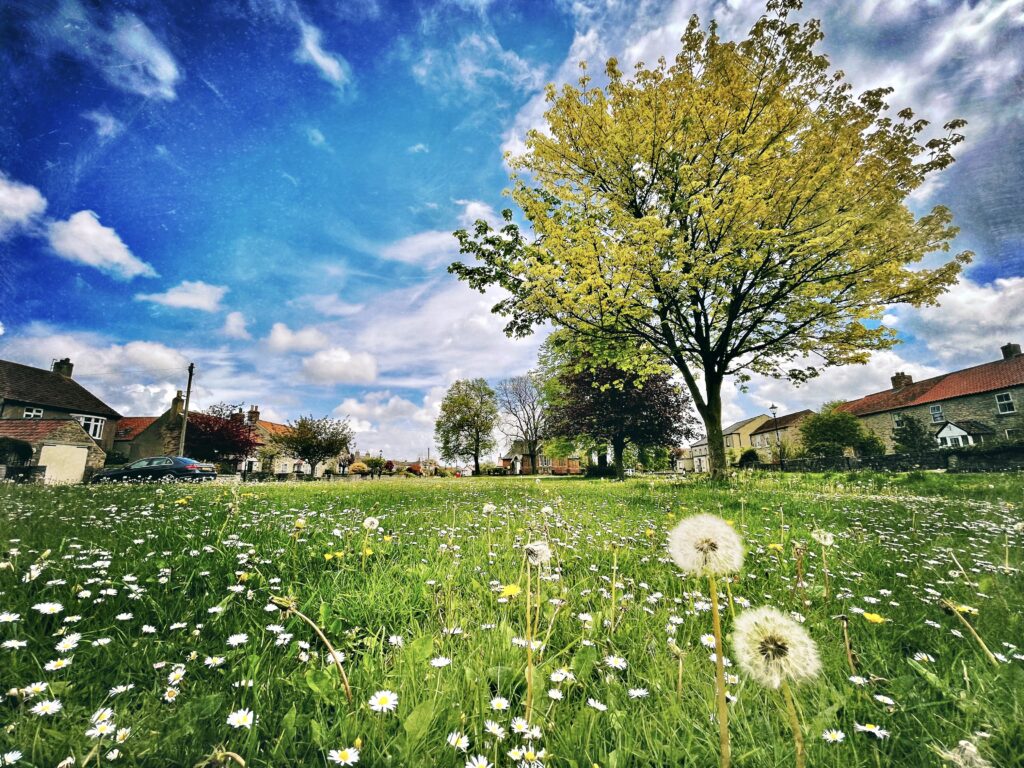
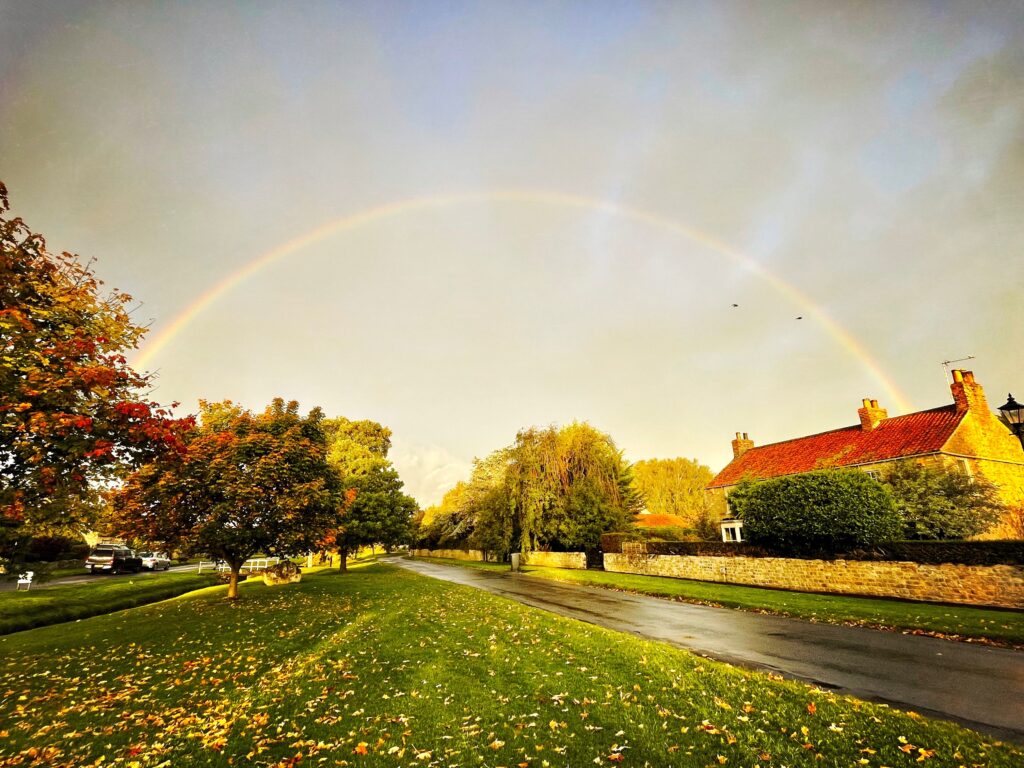
The village of Snape stands three miles south of Bedale and three miles west of the A1. A community of some 350 souls, it is located around the long and narrow village green and is evenly split by Snape Beck. This pretty and well kept village is best approached from the west along the avenue of Lime trees which lead to Snape Castle.
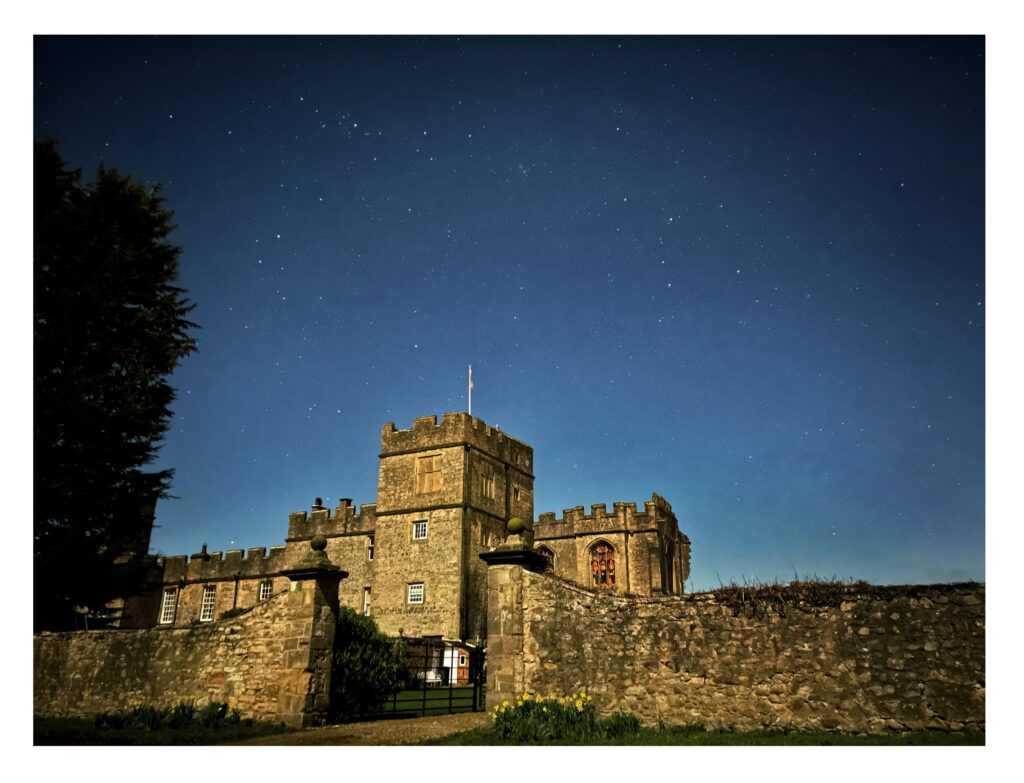
Snape Castle
The Castle is privately occupied and is not accessible to the public but its old domestic chapel is now a ‘Chapel of Ease’ where divine Service is held on alternate Sundays ( 2nd and 4th). Public access is allowed to the chapel which is signposted from the road,look for the “Chapel Open” sign and follow the path.
History
Snape’s historical associations include the site of a Roman Villa; Snape Castle the residence of Catherine Parr prior to her marriage to Henry VIII; involvement in the Pilgrimage of Grace in 1536 but not in the Rising of the North in 1569.
In more recent times Snape developed as a centre for the wool combing trade and the population rose to 689 in the year 1823. This cottage industry fell to industrialisation, and the establishment of the woollen mills of the West Riding resulted in a marked reduction of the village population.
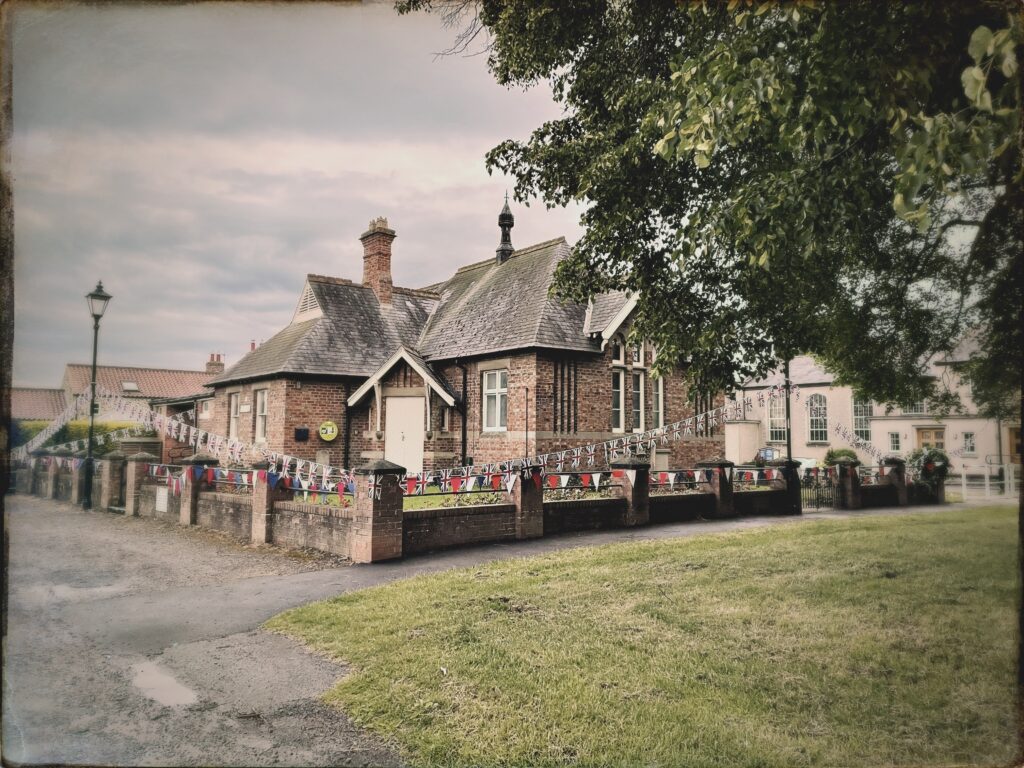
Institute
The Village Institute was erected in 1885 by Miss Edith Milbank in memory of her father M.V. Vane and her grandfather Mark Milbank. It originally consisted of a reading room and a lecture hall but was extended in 1905 by W.C.Gray of Thorp Perrow. In the wall by the west entrance is set a boundary stone, which stood until, recently on the far side of Kings Kell on the Bedale road. It is inscribed ‘Heare Endeth Snape Hyrode 1755’ ; it marked the limit of the township’s responsibility for the upkeep of the road.
The war memorial on the outside of the west end of the Institute is made from stone salvaged from the bomb damaged Palace of Westminster during WW2 . It was erected and presented to the village in memory of those who Fell in the both World Wars by Colonel, Sir Leonard Ropner of Thorp Perrow in 1948.
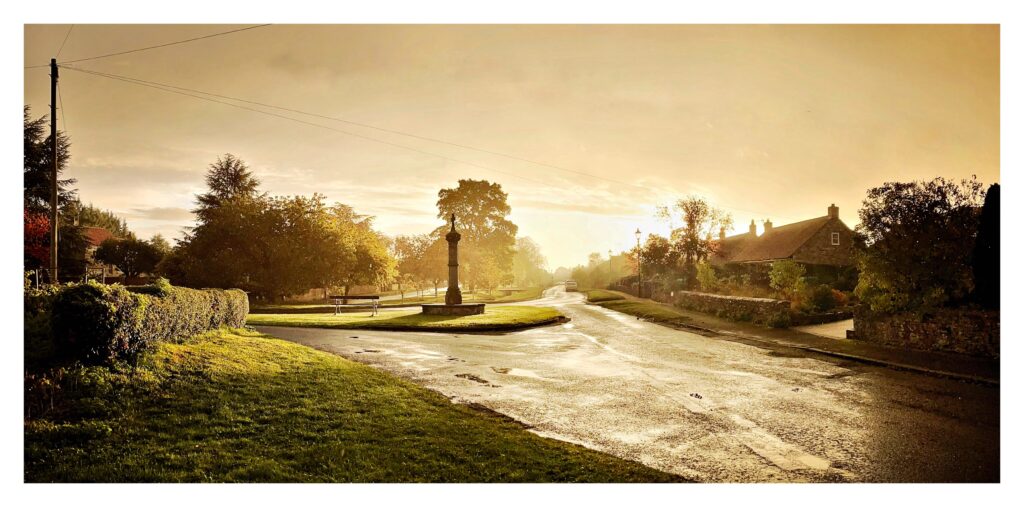
Milbank Monument
At the top of the village is a Monument in the form of a cross erected by grateful friends in memory of Lady Augusta Milbank of Thorp Perrow, who died in 1874.
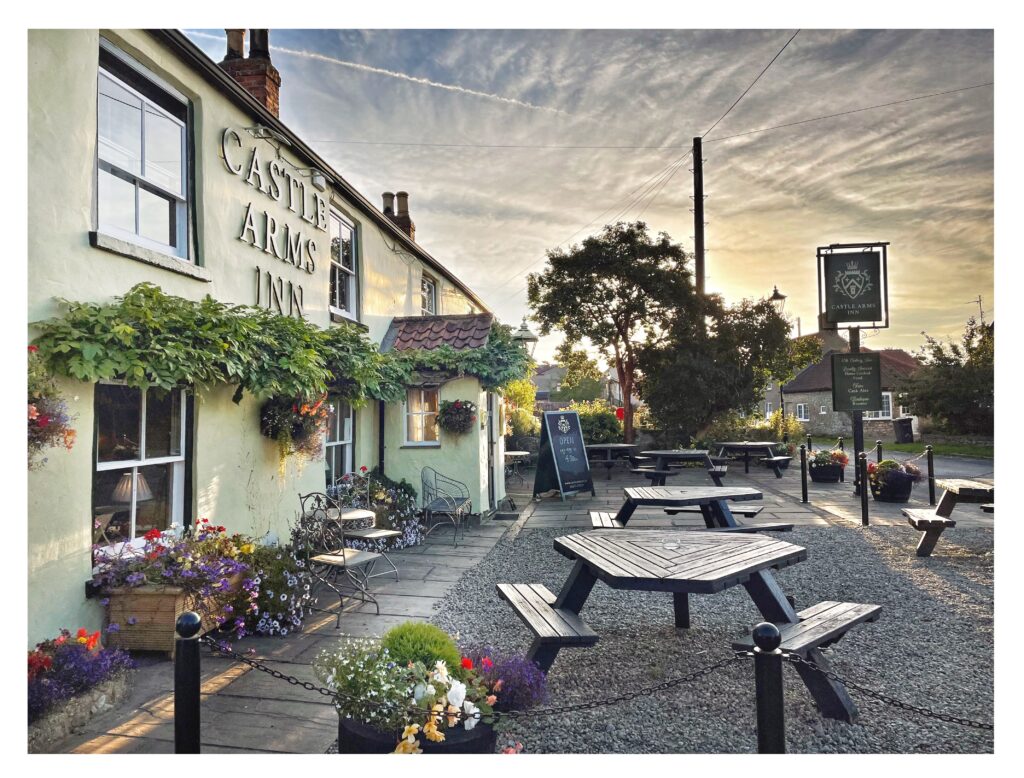
Castle Arms Inn
Not quite so old, dating from the 18th century, and still offering access to the public is the Castle Arms Inn, the only survivor of the three earlier village inns. It is probably early to middle eighteenth century and is a grade 2 listed building. Evidence from the exterior shows it to be of two quite separate periods. Inside, beams run from end to end, and from front to back respectively. The front door opens into a small vestibule directly facing the side of the chimney. The Inn was at one time a Farm and Buildings ~ a cowbyre, foldyard, and piggery now converted into a bedrooms stand behind. The covered Foldyard, possibly from the late eighteenth century, was an important agricultural improvement, which enabled the wintering of more cattle than previously. Pigs were an important item in village economy and most villagers would have kept one. The feeding chute, through which skimmed milk, the residue of butter making, was fed to the pigs, is still visible.
To the right of the pub stands an earlier Cruck Framed Cottage, one of 3 in the village. The central pair of matching timbers take the weight of the roof and stand on large stones (stylebates) visible from the outside, to keep the feet of the crucks dry. The cottage would once have been thatched, possibly with reeds from Snape Mires.
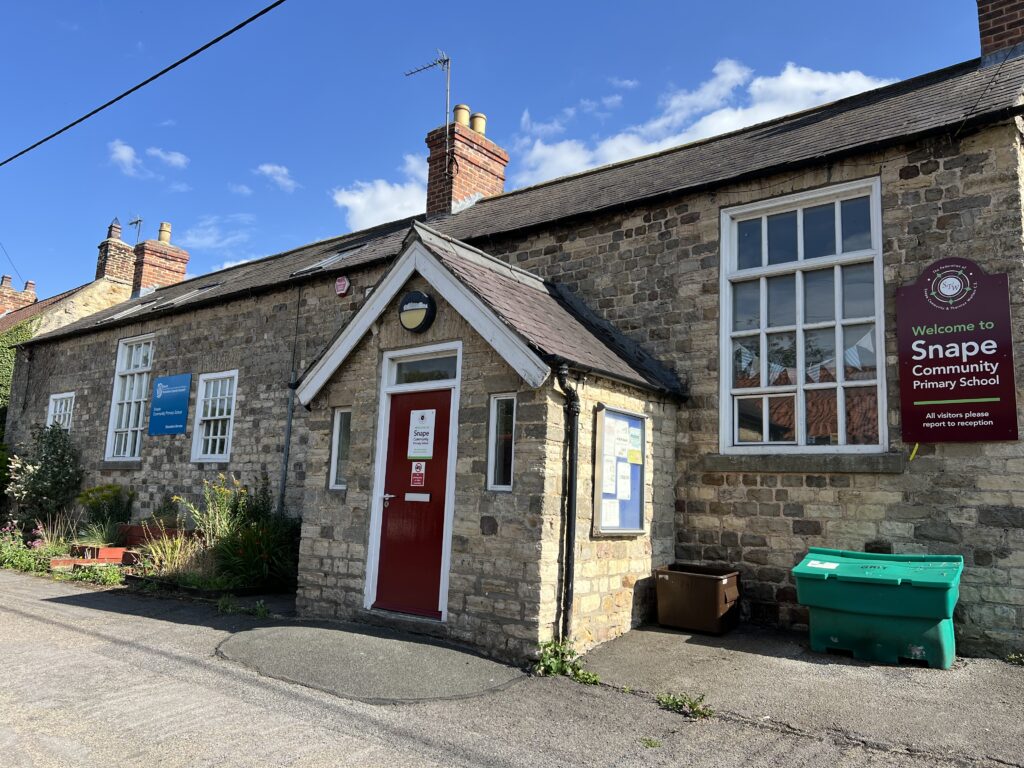
Snape Community School
Not quite so old, dating from the 18th century, and still offering access to the public is the Castle Arms Inn, the only survivor of the three earlier village inns. It is probably early to middle eighteenth century and is a grade 2 listed building. Evidence from the exterior shows it to be of two quite separate periods. Inside, beams run from end to end, and from front to back respectively. The front door opens into a small vestibule directly facing the side of the chimney. The Inn was at one time a Farm and Buildings ~ a cowbyre, foldyard, and piggery now converted into a bedrooms stand behind. The covered Foldyard, possibly from the late eighteenth century, was an important agricultural improvement, which enabled the wintering of more cattle than previously. Pigs were an important item in village economy and most villagers would have kept one. The feeding chute, through which skimmed milk, the residue of butter making, was fed to the pigs, is still visible.
To the right of the pub stands an earlier Cruck Framed Cottage, one of 3 in the village. The central pair of matching timbers take the weight of the roof and stand on large stones (stylebates) visible from the outside, to keep the feet of the crucks dry. The cottage would once have been thatched, possibly with reeds from Snape Mires.
Images curtesy of James LePage, Snape
Contact
For any information regarding Snape Local History Group please contact Dian Hosking at diane.hosking@btinternet.com